Vitalik responds to the "Prysm client" vulnerability incident: It doesn't matter if Ethereum is occasionally not final! Just don't make the mistake final
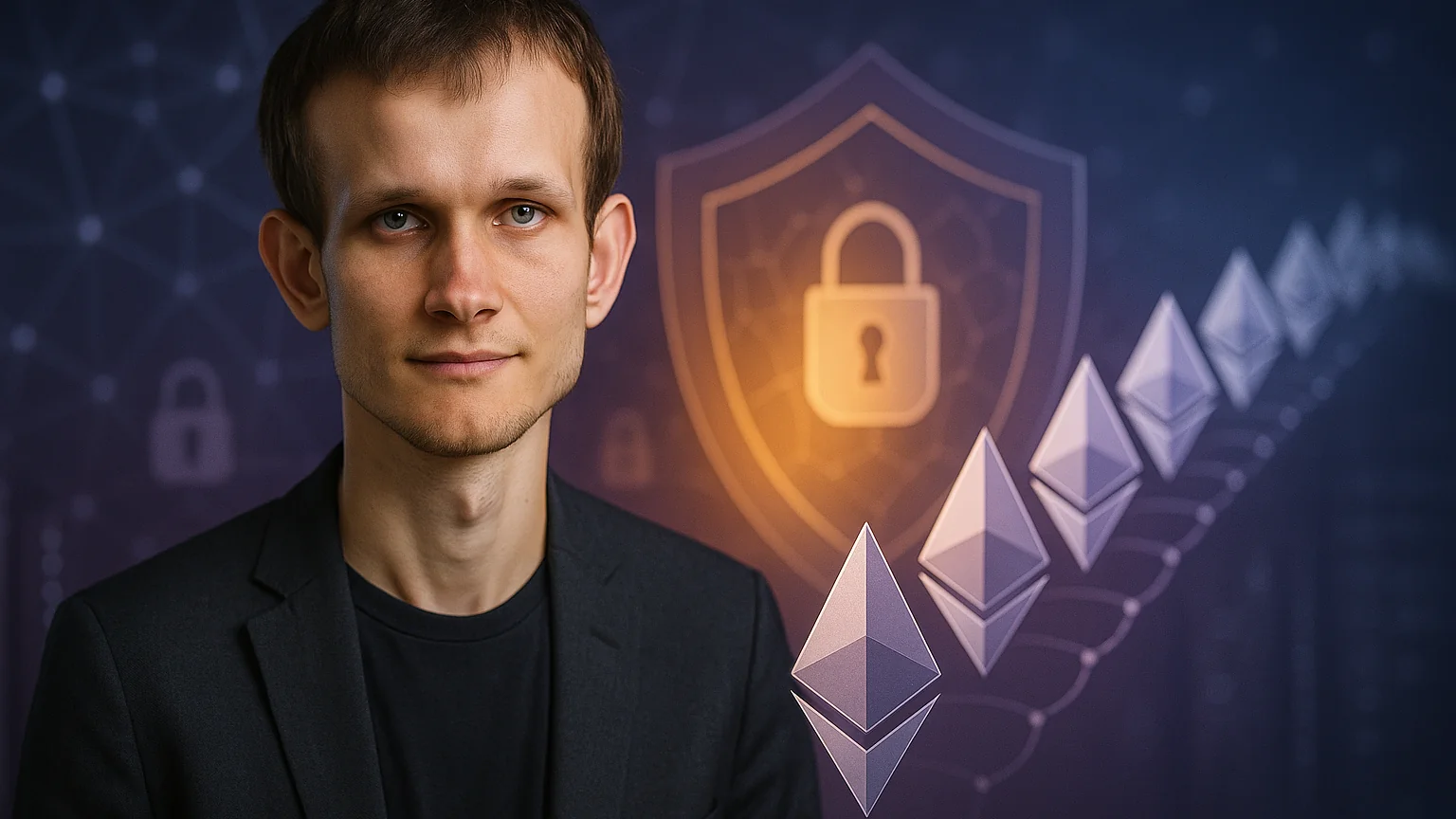
Ethereum co-founder Vitalik Buterin responded to the recent incident in which a Prysm client vulnerability almost led to a finality outage. He personally downplayed the community's concerns: "It's okay to lose finality occasionally. What's really terrible is finalizing the wrong block." He emphasized that a delay of a few hours is not harmful, the chain can still run, and there is only one key red line: Don't end up with the wrong thing.
(Previous summary: Quick overview: What benefits has the Fusaka upgrade brought to Ethereum?)
(Background supplement: Vitalik’s shouting: Ethereum’s gas limit will increase by 5 times in 2026, but inefficient operations will be fined 5 times!)
Contents of this article
Shortly after the Ethereum mainnet completed the Fusaka upgrade on December 3, Prysm Due to v7.0.0 v7.0.0 vulnerability in the client, a large number of validators were unable to vote correctly. The online voting participation rate once fell below 75%, leaving only 9 percentage points before the finality was officially lost, causing panic in the community. However, under the emergency coordination of the developers, the problem was fixed within a few hours, and the finality on the chain was finally restored smoothly.
Vitalik Buterin personally responded: It’s okay to lose finality occasionally
Although the vulnerability issue was resolved in time, the discussion in the community was still heated. In this regard, Ethereum co-founder Vitalik Buterin also posted on the bug, causing finalization to be delayed for a few hours, it doesn't matter, the chain will continue to operate normally during that time. What we really need to avoid is "finalizing the wrong block"
Nothing wrong with losing finalization once in a while imo.
Finalization is for when we're _really sure_ a block won't be reverted. If finality delays a few hours when a major client has a bug, that's fine. The chain keeps going during that time.
The thing to avoid is…
— vitalik.eth (@VitalikButerin) December 4, 2025
Ethereum protocol experts fully agree
According to the "Cointelegraph" report, Fabrizio Romano Genovese, a PhD in computer science at the University of Oxford in the UK, a partner at the blockchain research company 20squares and an expert on the Ethereum protocol, expressed 100% of Vitalik's statement. Agreeing, he further explained: "When Ethereum loses finality, it actually only temporarily degenerates into the Bitcoin model. Bitcoin has never been finalized since its launch in 2009, and everyone is still happy with it."
He emphasized that losing finality does not mean that the chain is insecure, but that "the guarantee against reorganization has changed from 'certainty' to 'probability'." In May 2023, due to Prysm and Teku client bugs, finality was lost twice in a row for 24 hours. However, the Ethereum mainnet still produced blocks normally and did not cause systemic risks.
In addition, Genovese also pointed out that what will really be affected is Layer 2 and cross-chain bridges that "over-rely on finality." For example, Polygon's AggLayer will suspend deposits and withdrawals, but user funds will not be rolled back. "At most, the arrival will be slower." He believes that if the bridge developer fails to prepare a backup mechanism for eventual temporary loss, that is the developer's responsibility, not the problem of the protocol itself.
What exactly is the "finality" of Ethereum?
The finality of Ethereum is the core guarantee of its PoS consensus: when a block receives votes from more than 66% (2/3) of the validators in the entire network, it will be marked as "justified"; if more than 2/3 of the votes are maintained for two consecutive epochs, the block will be "finalized"; once finalized, theoretically it can never be rolled back unless more than 1/3 Validators do evil and are willing to have their huge amounts of staked ETH burned.
If the voting rate is lower than 66% for a long time, the "Inactivity Leak" mechanism will be activated to punish offline validators and restore the network to normal.