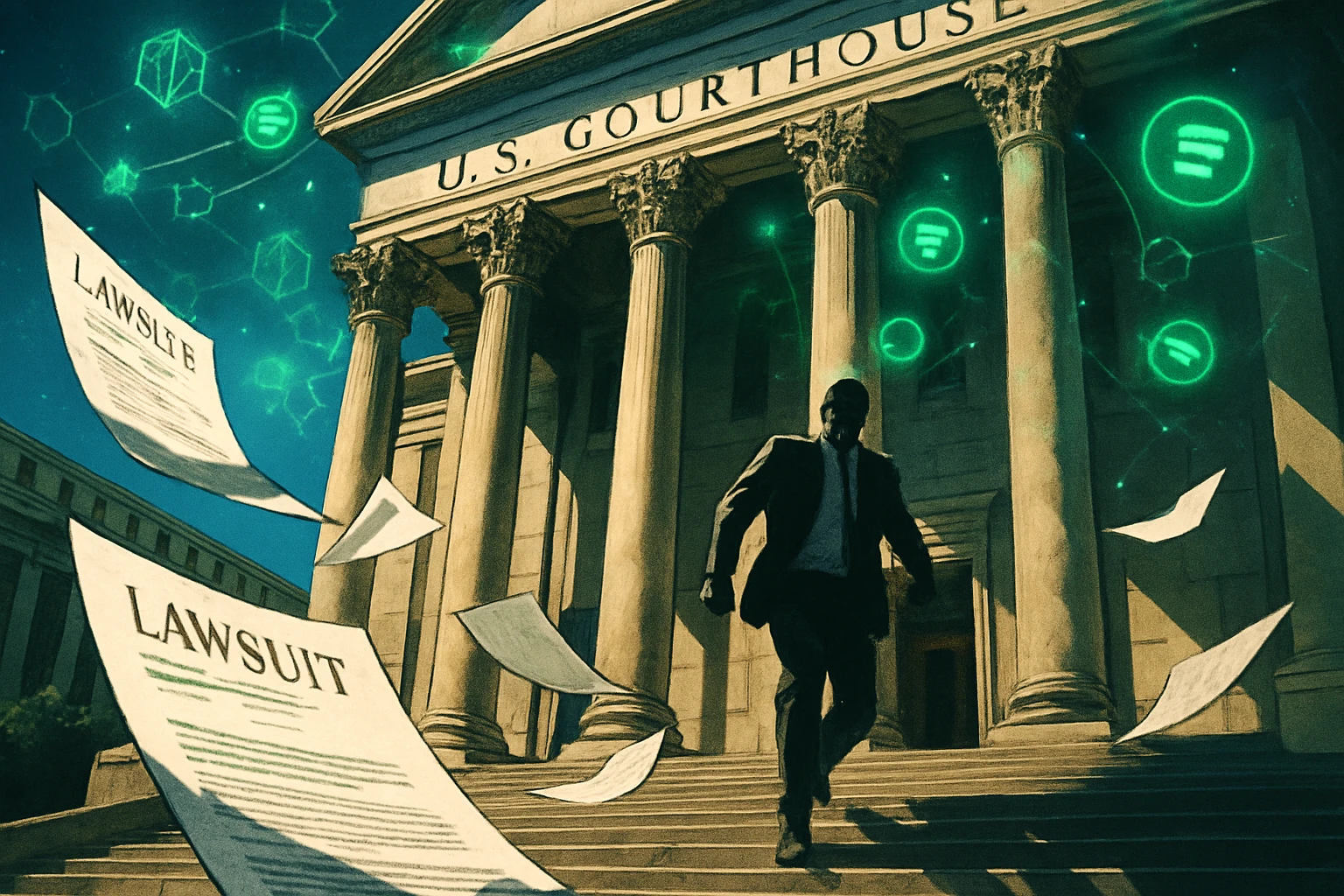
An American man concealed "$345 million in Bitcoin" hidden in the evidence hard drive! FBI directly formatted it. The private key was broken.
A man in the United States concealed the fact that he held Bitcoin when he was accused, which resulted in the FBI formatting the hard drive containing about 3,443 Bitcoin private keys. He appealed to the court and was ruled that the official did not need to compensate. You still have to be honest.
(Preliminary summary: Confessions of a Victim" My private key was leaked and 30 million US dollars was stolen)
(Background supplement: Bitcoin surged 10 times but cannot be obtained! Taiwanese netizens lost 1.5 BTC after losing their private key and offered a reward of 360,000 to solve it. )
Contents of this article
A seemingly ordinary hard drive was completely formatted in the standard operating procedure of the Federal Bureau of Investigation (FBI), and more than 3,443 Bitcoins with a current value of approximately US$345 million were wiped out. The Eleventh Circuit Court of Appeals ruled on November 4, confirming that the FBI was not responsible and witnessed the large amount of Bitcoin "disappeared."
Core of the Judgment
These Bitcoins came from the protagonist of the case, Michael Prime. He was tried for theft by assuming a false identity in 2019. He once claimed to the detective that he held about 3,500 Bitcoins, but after his plea agreement in February 2020, he changed his statement in the financial disclosure document to "only worth 200 to 1,500." U.S. dollar Bitcoin", but the court pointed out in its judgment that the unit price of Bitcoin had already exceeded US$10,000 at the time, and Prime's argument was refuted as "ridiculous."
The judge cited the principle of balance and emphasized that the parties have denied holding coins for many years and delayed claiming their rights. Any compensation is unfair. After Michael Prime was released from prison, he overturned the case again, but the hard drive containing the Bitcoin private key had been formatted in the FBI's standard procedure.
How to cut off relief with contradictory statements
Michael Prime boasted before the trial, changed his story after the trial, and then called himself a "Bitcoin tycoon" after serving his sentence. Repeated statements became the basis for his inability to recover his assets. Court documents state:
For years, Mr. Prime has denied owning large amounts of Bitcoin. When he came out of jail to seek repayment, Bitcoin was not on the list. It was only later that he claimed to own a huge amount of Bitcoin.
Judgment cases clearly show that it is difficult to convince the judicial system that asset claims are not immediate and consistent.
According to Glassnode data, the market estimates that nearly 1.46 million Bitcoins have been permanently lost, accounting for approximately 7% of the circulating supply. Losing the key is equivalent to losing ownership. No one can touch it anymore, no matter how big or small the wealth is.
Standard Practice and Encryption Vulnerabilities
The FBI’s process was not targeted at this individual, nor was it an intentional attempt to destroy his assets. Property involved in money laundering or fraud may be subject to forfeiture under 18 U.S.C. §981 and §982. To ensure the safety of evidence, law enforcement officers will first make image backups and then destroy the originals after the case is closed.
Michael Prime never provided credible proof to the court or prosecutors that the device contained a high-value private key, so the hard drive was treated as a general exhibit and he could only swallow the loss.
Digital assets are different from real estate and cars. Their value is entirely hidden in invisible private key files. If the holder chooses to remain silent, the law has no reason to make an exception for the privacy of that cryptocurrency.