New paper by the author of Black Swan: Is it safer to invest without losing money? Structural risks hidden behind
Nassim Nicholas Taleb, author of the black swan theory, published a new paper pointing out that the illusion of safety that many people have about "stop loss" is actually wrong. He emphasized that stop loss is not a talisman to reduce risks, but concentrates the originally scattered loss probability at one price point, forming an "hidden peak risk" that is difficult to detect but more dangerous.
(Preliminary summary: Has the Bitcoin escape indicator failed? How should investors recalibrate)
(Background supplement: How to survive the Bitcoin winter? Investment strategies, suggestions and bottom judgment)
Contents of this article
Nassim Nicholas Taleb, the author of the black swan theory, shared his latest paper "Trading With a Stop" through the X platform on December 4, which attracted great attention in the financial circle. He made a counter-intuitive conclusion: "Stop loss" is not the panacea investors think it is, and may even create new risks. This argument not only challenges the mainstream investment philosophy, but also makes countless market participants who are accustomed to using "stop loss" as a basic risk control tool begin to re-examine their trading logic.
In a nutshell, the core point of the entire paper is only one sentence:
Stop loss does not reduce risk, but compresses risk from a dispersed and natural shape into a concentrated and fragile "exploding point".
Why is stop loss not the "protection mechanism" you think it is?
General investors believe that as long as a stop loss is set, the maximum loss can be limited and the final loss will not get out of control. Taleb points out, however, that this is a long-standing misconception in the investment community. In the absence of a stop loss, there are many possibilities for a position to lose: 5%, 10%, 20%, or even 80%. These results will be distributed in different possible ranges with natural and dispersed probabilities, like a smooth beach.
However, when investors set a stop loss, such as -5%, the situation is completely different. Those results that may originally occur at -10%, -20%, or even -80% will not really disappear, but will be concentrated and compressed at the single point of -5%.
Taleb used a physics concept to describe this phenomenon: "Dirac Mass" - that is, an originally smooth distribution is sharply squeezed into a highly concentrated peak. The vernacular is: Stop loss allows all the bad results you may encounter to accumulate at the same point, turning it into a fragile, conspicuous, and risk concentration area that everyone can see.
The market path is rewritten: Stop loss is not static, it will in turn affect the market
Taleb pointed out that once a stop loss is set, the possible path of the asset price is no longer the original random behavior, but becomes a movement that "interacts with the wall". The closer the market gets to your stop, the more likely investor behavior will change and market liquidity will have a concentration effect.
At the same time, these stop loss points do not exist in isolation, but together with the stop loss points of other investors, form a huge and fragile liquidity area in the market. The market price will naturally be sucked in because there are a large number of orders waiting to be triggered.
Therefore, the stop-loss behavior that seems to "reduce risk" actually creates new discontinuous risks, and may even intensify volatility, causing the market to suddenly jump at a specific price.
Taleb: Stop loss is a kind of exchange, not insurance
However, this paper does not advocate investors to "stop losses". Taleb emphasizes that stopping loss does not reduce risk, but reallocates risk into another shape. What you get through stop loss is:
- A high probability of a small loss (stopped)
- Avoiding a low probability but extreme large loss (crash, gap)
This is an exchange, not a free protection mechanism.
In fact, the market has also discovered a similar point of view as Taleb under the rule of thumb. Large investors usually hit the investor's stop loss point accurately before starting to pull or sell. Therefore, there is a trading method that is to catch such false breakthroughs/breakthroughs.
Another potential way to break the situation where the stop loss point is sniped is for investors to place trigger orders (place orders only after the price reaches a specified point). However, this requires the vast majority of investors to do this before it can be changed, and some giant whales will also influence market judgment through fake orders. The overall situation is not that simple.
After Taleb’s paper was released, discussions quickly arose on social platforms. User @b66ny bluntly said:
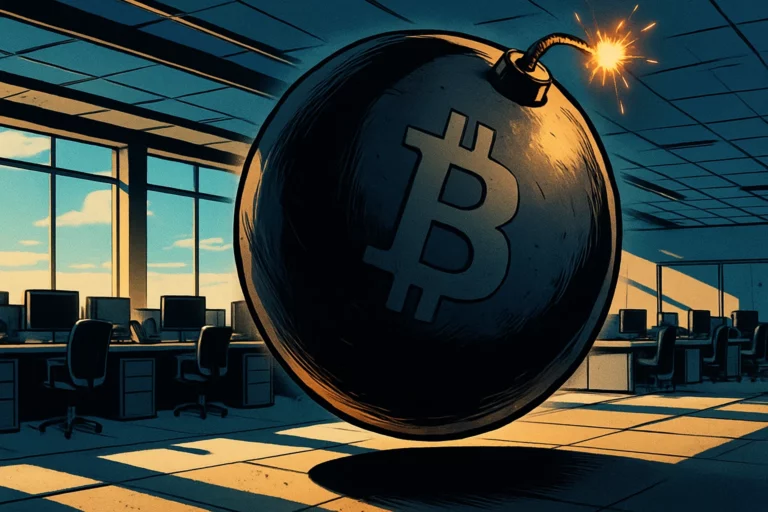
"Stop loss is not a talisman, it just puts a time bomb on the price you set."
He pointed out that stop loss "attracts all the originally dispersed loss probabilities to the same point," making this price the most vulnerable, most vulnerable to attack, and most easily attracted by liquidity.
Many investors think that the market is "chasing the stop loss". In fact, to some extent, this is because everyone places the stop loss at the same position, collectively creating a liquidity black hole. He concluded:
"Stop loss is not a magic to reduce risk, but a choice - choosing where to die and whether it is worth dying."
Taleb's paper also reminds investors: Stop loss is not that it should not be used, but that it must be understood correctly. In the world of risk management, there is no such thing as zero-cost protection. Understanding what you are really undertaking is the most critical safety measure in investing.