The probability of LTC and SOL spot ETFs passing in October exceeds 90%, and altcoins welcome the SEC’s final ruling
The approval or disapproval of Litecoin (LTC) and SOL, which were the first to be adjudicated, may determine the expected subsequent market direction.
(Preliminary summary: 1 billion US dollars bet on Solana! Is this plunge a bargain hunting moment for crypto institutions?)
(Background supplement: New trend in crypto vaults: Is buying SOL more efficient than hoarding ETH?)
Contents of this article
In October, the U.S. Securities and Exchange Commission (SEC) will investigate at least 16 A final ruling has been made on the filing of spot cryptocurrency exchange-traded funds (ETFs) involving a variety of tokens outside of Bitcoin and Ethereum, such as SOL, XRP, LTC, DOGE, ADA, and HBAR. According to the latest developments, the SEC has withdrawn multiple delay notices and accelerated the approval process through new general listing rules, shortening the review time to less than 75 days.
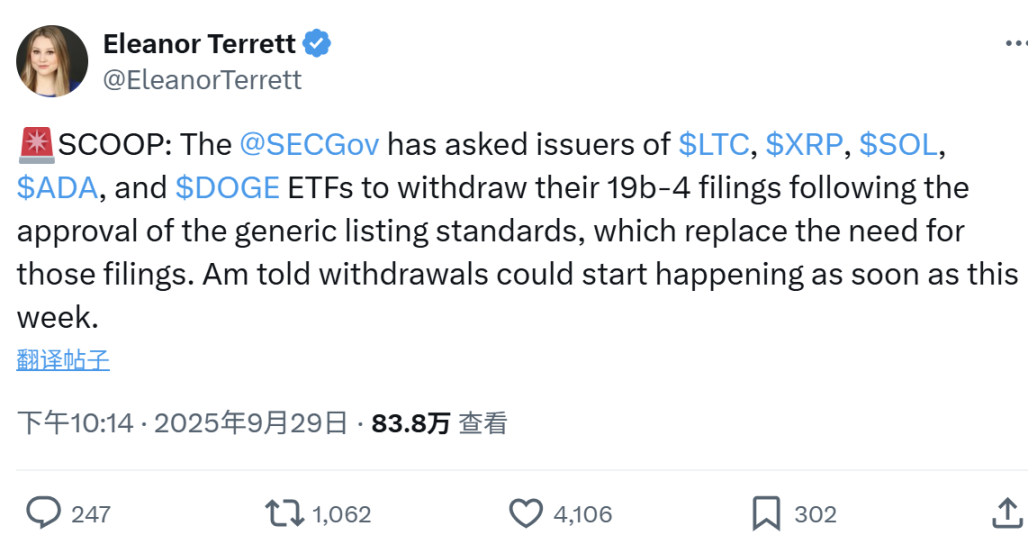
According to crypto journalist Eleanor Terrett, the U.S. SEC has asked issuers of LTC, XRP, SOL, ADA, and DOGE ETFs to withdraw their 19b-4 filings because they are no longer required after the approval of the Common Listing Standards.
Since being approved, the Bitcoin and Ethereum spot ETFs have received considerable capital inflows and played a significant role in the rise in currency prices. So can multiple ETFs be approved this time, and will there be an increase in currency prices?
The final deadline for multiple token ETF rulings is in October
According to information compiled by Twitter blogger Jseyff, the final deadlines for multiple altcoin spot ETFs are scattered throughout October. First up for approval is Canary’s LTC ETF, with a deadline of October 2.
This is followed by Grayscale’s Solana and LTC trust conversions, dated October 10, and finally WisdomTree’s XRP fund, dated October 24.
A decision could be made at any time before the final deadline, according to a list of upcoming approvals created by Bloomberg ETF analyst James Seyffart.
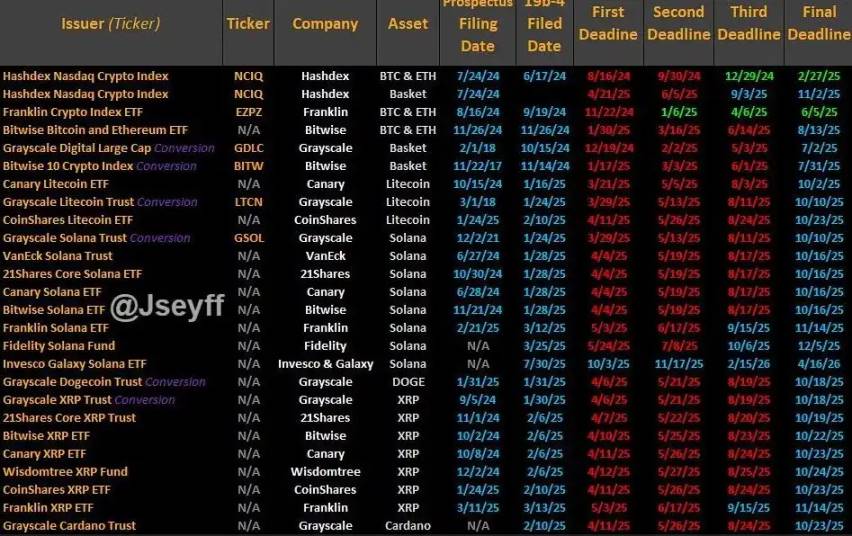
These applications come from institutions such as Grayscale, 21Shares, Bitwise, Canary Capital, WisdomTree and Franklin Templeton. It’s worth noting that no BlackRock or Fidelity participated in this round, but that doesn’t affect the potential impact – if approved, they could pave the way for larger-scale products to follow.
Since BTC and ETH spot ETFs, no other currency has been approved by the SEC. The SEC has continued to delay its application in the past. However, the upcoming final ruling must give the market a Yes or NO decision.
The market is looking forward to it.
The approval of Litecoin and SOL, which were the first to be adjudicated, may determine subsequent market expectations.
Approval probability
At the end of July this year, the SEC’s new listing standards mainly focused on the qualification requirements and operating mechanisms of crypto ETPs. First, entity creation and redemption are officially allowed, meaning authorized participants can exchange ETP shares for actual crypto assets instead of cash.
SEC also announced the listing standards for spot ETFs. The implementation of the new standards is expected to take effect in October 2025, aiming to simplify the listing process of ETFs. The general listing standards "require that crypto assets must be listed on major exchange futures such as Coinbase for at least 6 months. This regulation is designed to ensure that assets have sufficient liquidity and market depth to avoid manipulation.
Litecoin is famous as a long-standing altcoin, LTC Litecoin founder Charlie Lee said in a recent interview that he expects a spot LTC ETF to be launched soon. This view is based on the U.S. SEC’s approval of the universal listing standard for cryptocurrency ETFs and the inclusion of LTC as one of the 10 assets that meet the standards. In the interview, Charlie Lee talked about the prospects of LTC under the evolving regulatory framework. Listing standards, this is a key factor to promote, and emphasizes that Litecoin meets the conditions for rapid approval.
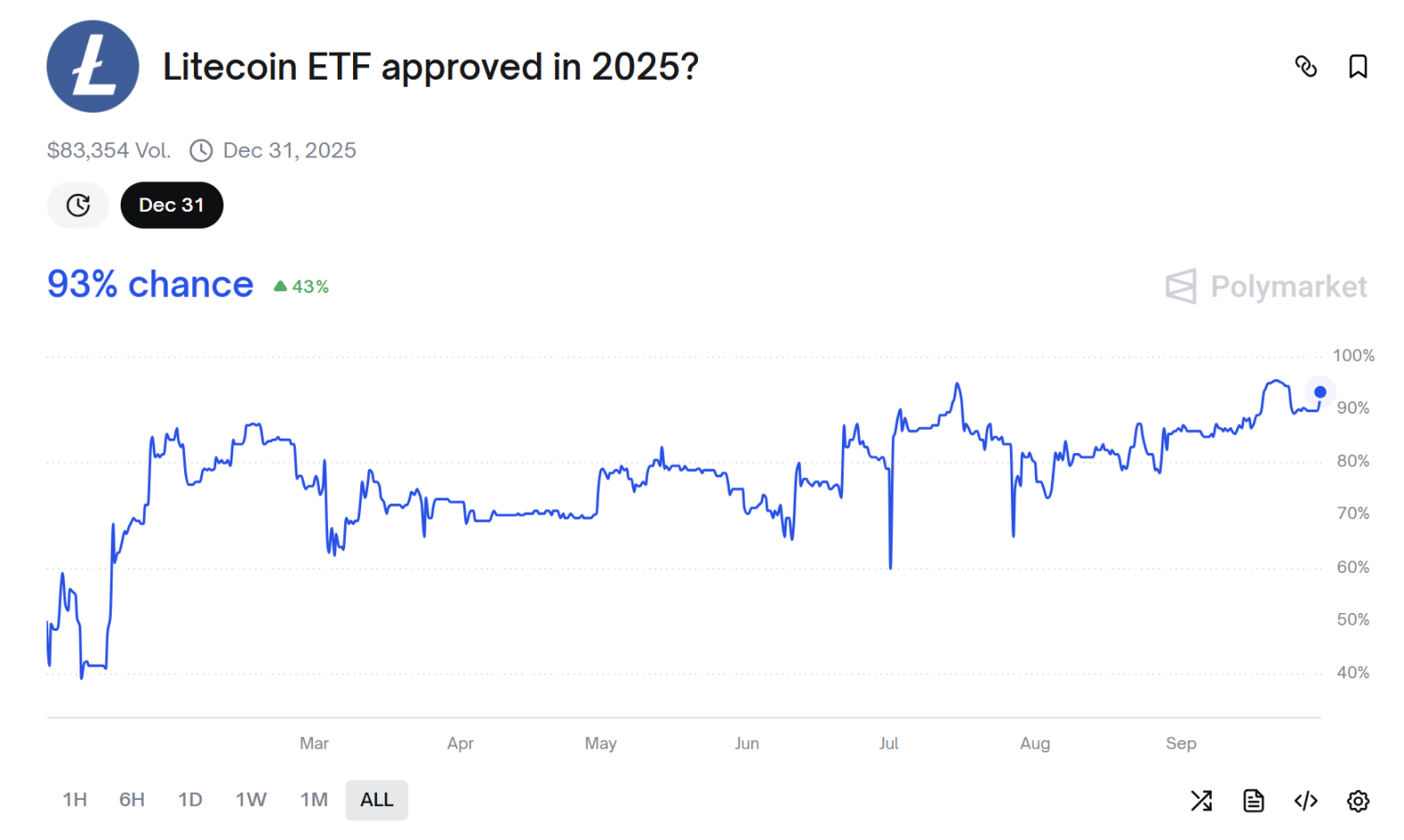
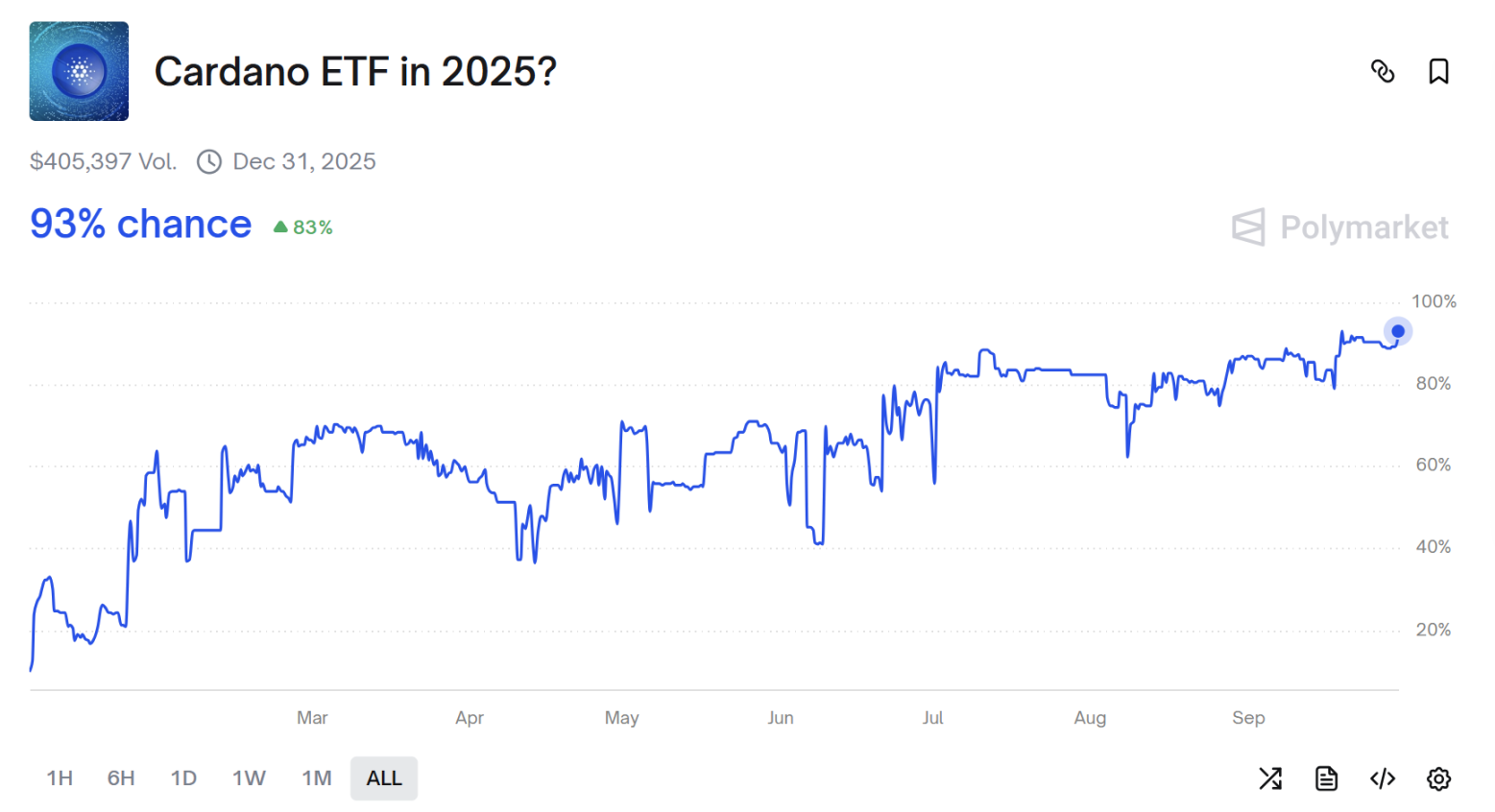
As of now, the market is betting on Litecoin spot ETF on Polymarket. The probability of approval this year has risen to 93%.
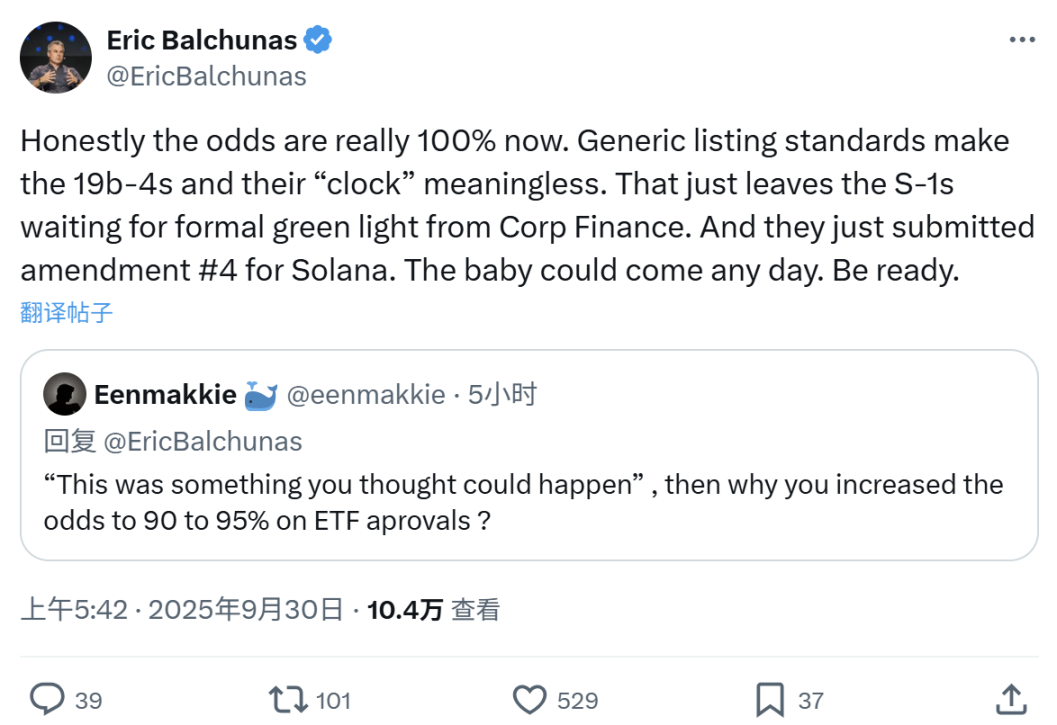
Regarding the situation of SOL's spot ETF, Bloomberg ETF analyst Eric Balchunas said, "To be honest, the success rate of SOL spot ETF's approval is now close to 100%. The universal listing standards make the 19b-4 filing and its time point meaningless, and now only the S-1 form related matters are left. The child may be born at any time, so be prepared."
It is worth mentioning that ADA is the last currency waiting for a ruling at the end of October, and the market on Polymarket is betting that the probability of its ETF being approved has risen to 93%.
The SEC’s decision in early October will obviously become the weather vane.
Previously, the SEC approved the Hashdex Crypto Index ETF. Recently, the Hashdex Nasdaq Crypto Index U.S. ETF (NCIQ) added support for XRP, SOL and XLM, allowing the product to provide U.S. investors with investment exposure to five cryptoassets: BTC, ETH, XRP, SOL and XLM through a single investment vehicle.
Previously, the US SEC approved the Bitwise 10 Crypto Index Fund to be converted into an ETF, covering assets including BTC, ETH, XRP, SOL, ADA, SUI, LINK, AVAX, LTC, and DOT.
Is approval beneficial to the currency price?
Bitfinex analysts have previously predicted that crypto ETF approvals could trigger a new altcoin season or rally, and that these approvals will provide traditional investors with more exposure to crypto investments.
However, some analysts do not agree with this view.
Bloomberg Exchange Traded Fund (ETF) analyst James Seyffart said that the current market is showing an altcoin market formed through the Digital Asset Finance Company (DATCO) rather than the rise in traditional token prices. Seyffart pointed out that institutional investors are more likely to choose multi-cryptocurrency portfolio products rather than single altcoin ETFs.
He emphasized that institutional funds prefer to obtain cryptocurrency exposure through regulated products rather than directly holding tokens. This structural change may permanently change the rising pattern of altcoins.